


Born in Mexico in 1904, Dolores del Río was one of Hollywood’s first Latin American movie stars, who began her career in silent films in the 1920s and transitioned to sound. Del Río is considered one of the most important female figures of the golden age of Mexican cinema, along with her friend María Félix. Elsa Schiaparelli said she had seen many beautiful women but none as complete as del Río. Diego Rivera said she was “The most beautiful, the most gorgeous of the west, east, north and south. I’m in love with her as 40 million Mexicans and 120 million Americans who can’t be wrong.”
Throughout her life, countless artists depicted del Río, shaping her image beyond Hollywood myth. Alfredo Ramos Martínez, a popular artist in Mexican high society, first painted her when she was 11 years old. In the 1920s, Roberto Montenegro and Ángel Zárraga also made portraits, and she posed for Canadian sculptor Louis-Philippe Hébert’s statue of Evangeline. She played the heroine of Longfellow’s romantic poem of the same name in the 1929 film. Salvador Novo dedicated a sonnet to her and translated her stage plays. She inspired Jaime Torres Bodet’s novel Star of the Day (La Estrella de Día), published in 1933, which chronicles the life of an actress named “Piedad.”
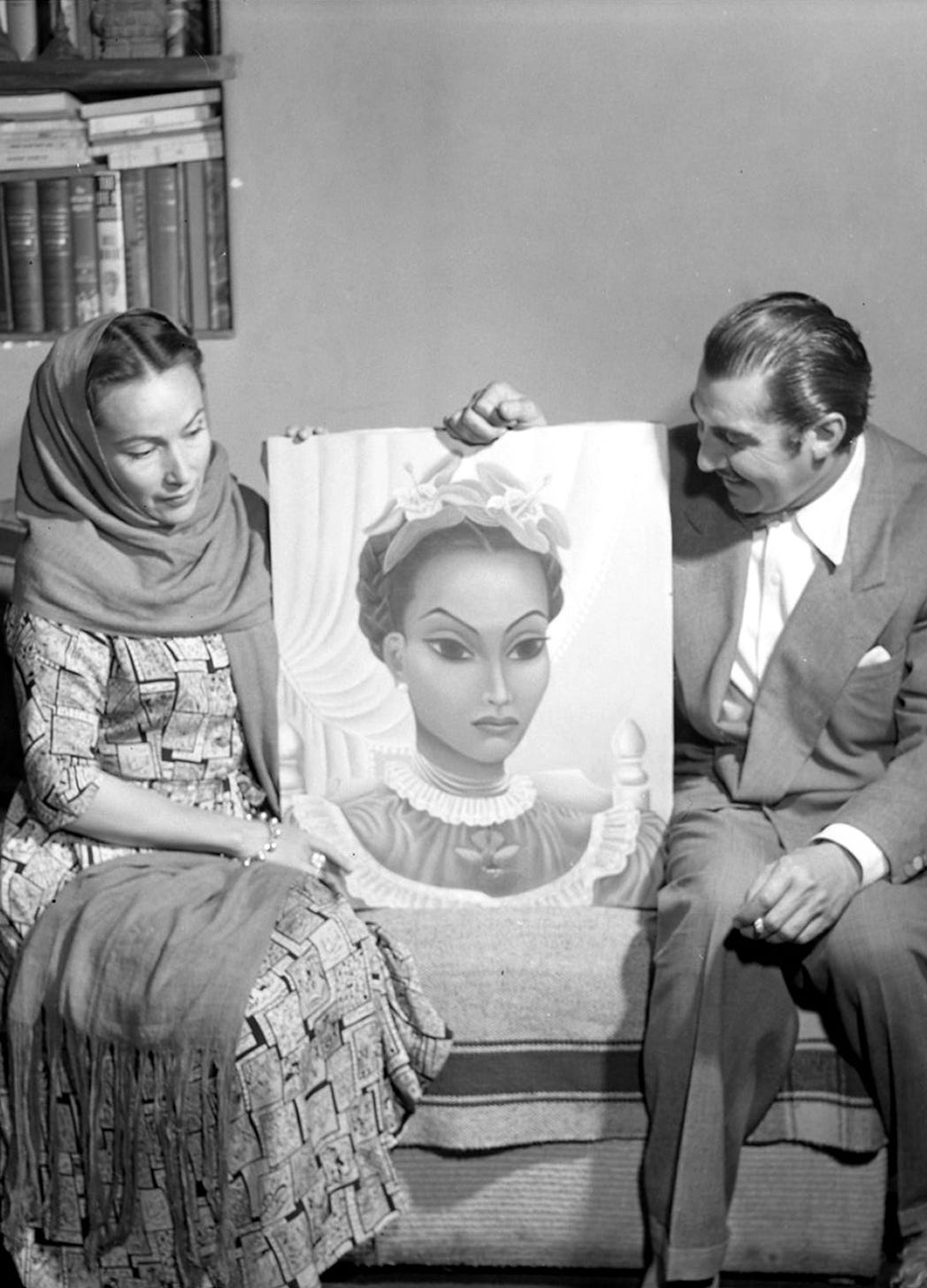
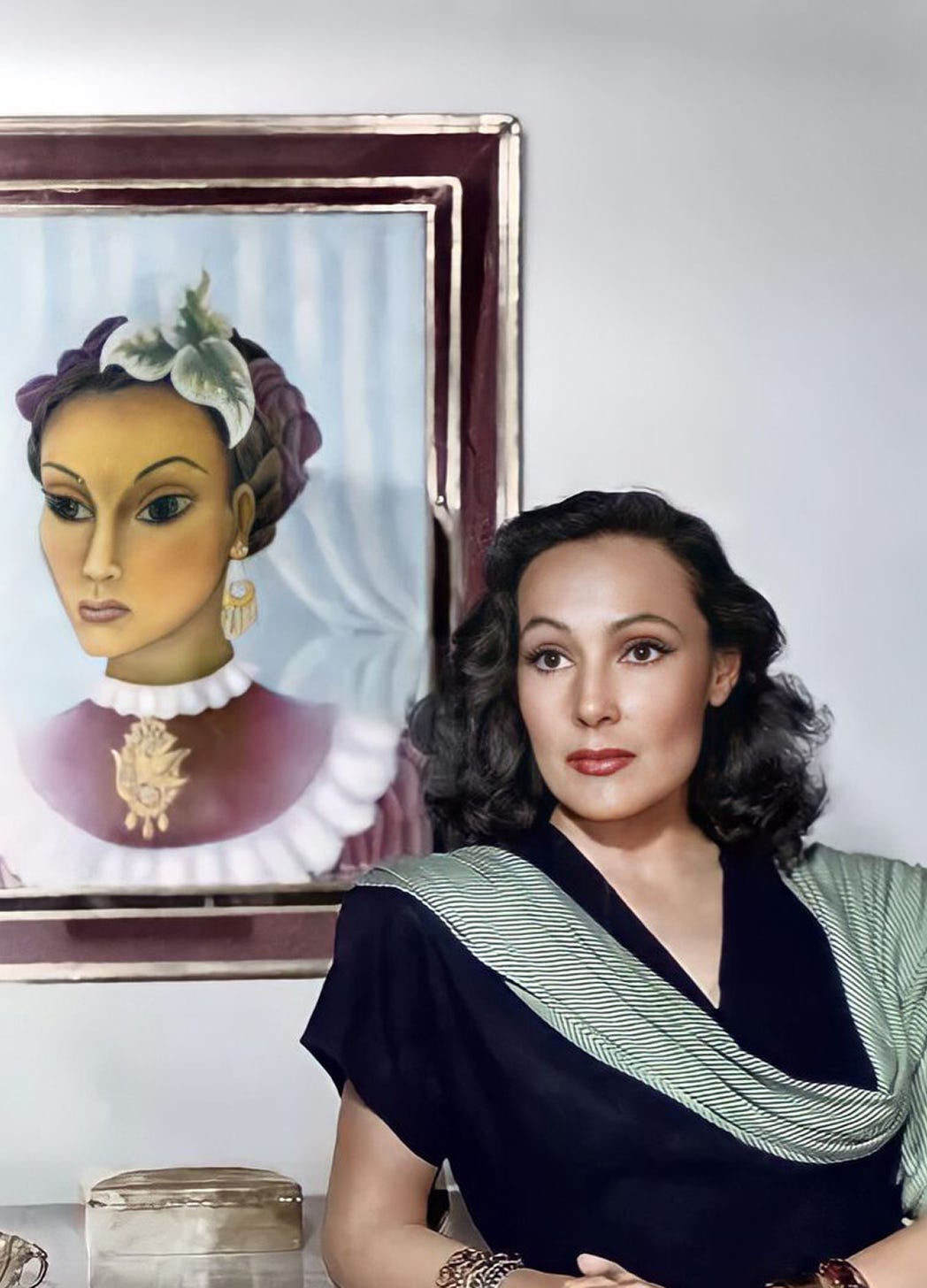
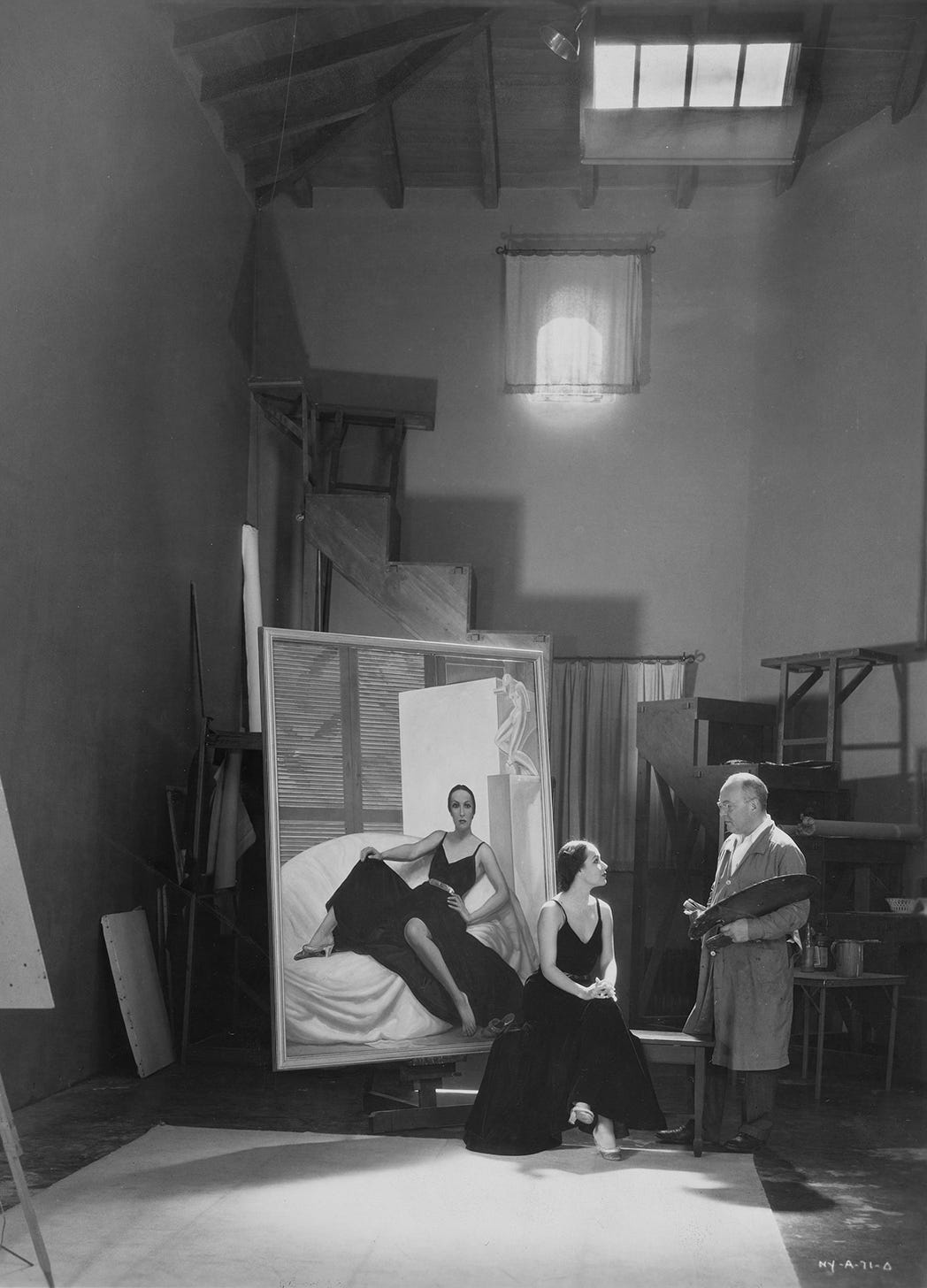
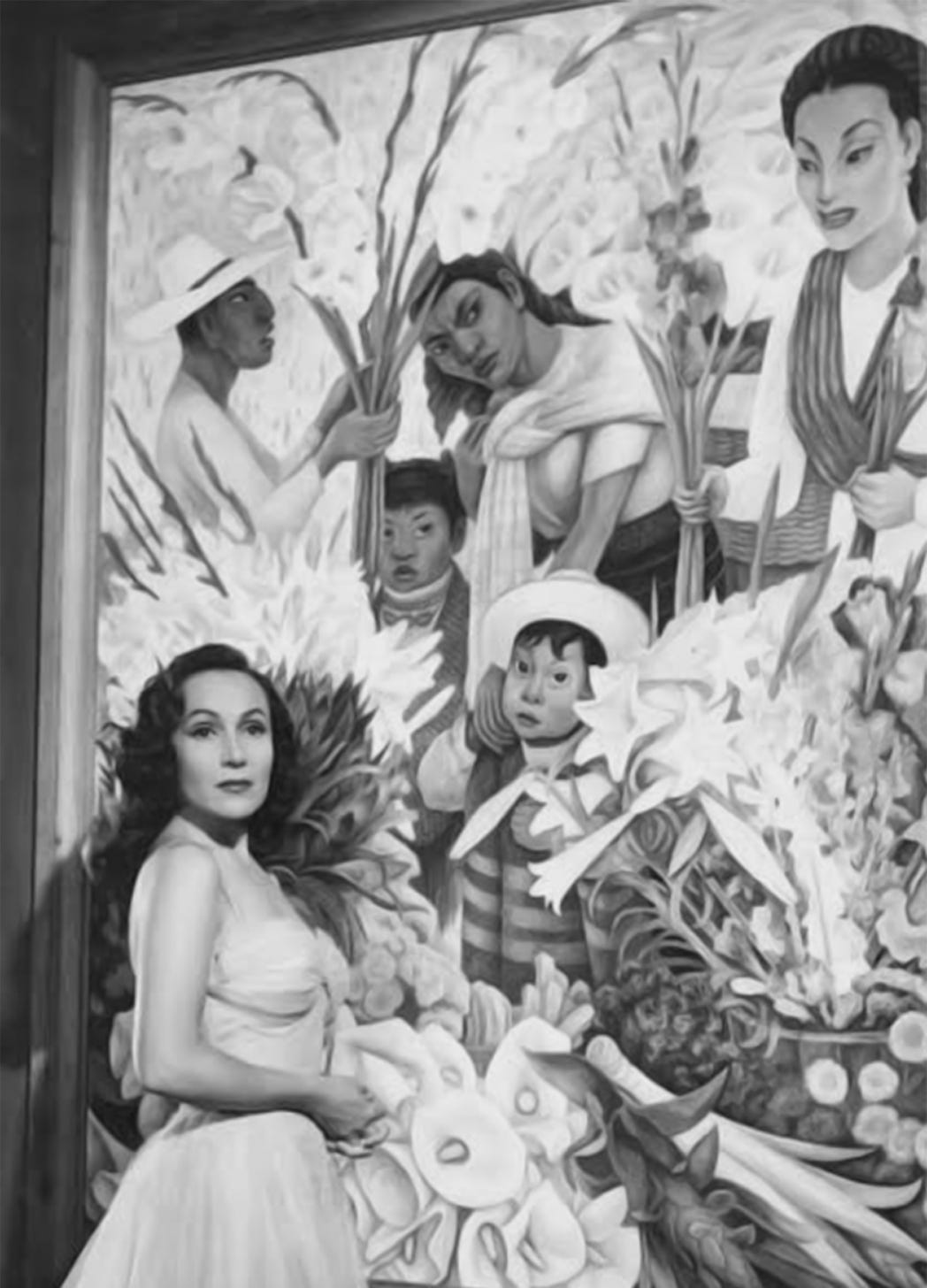
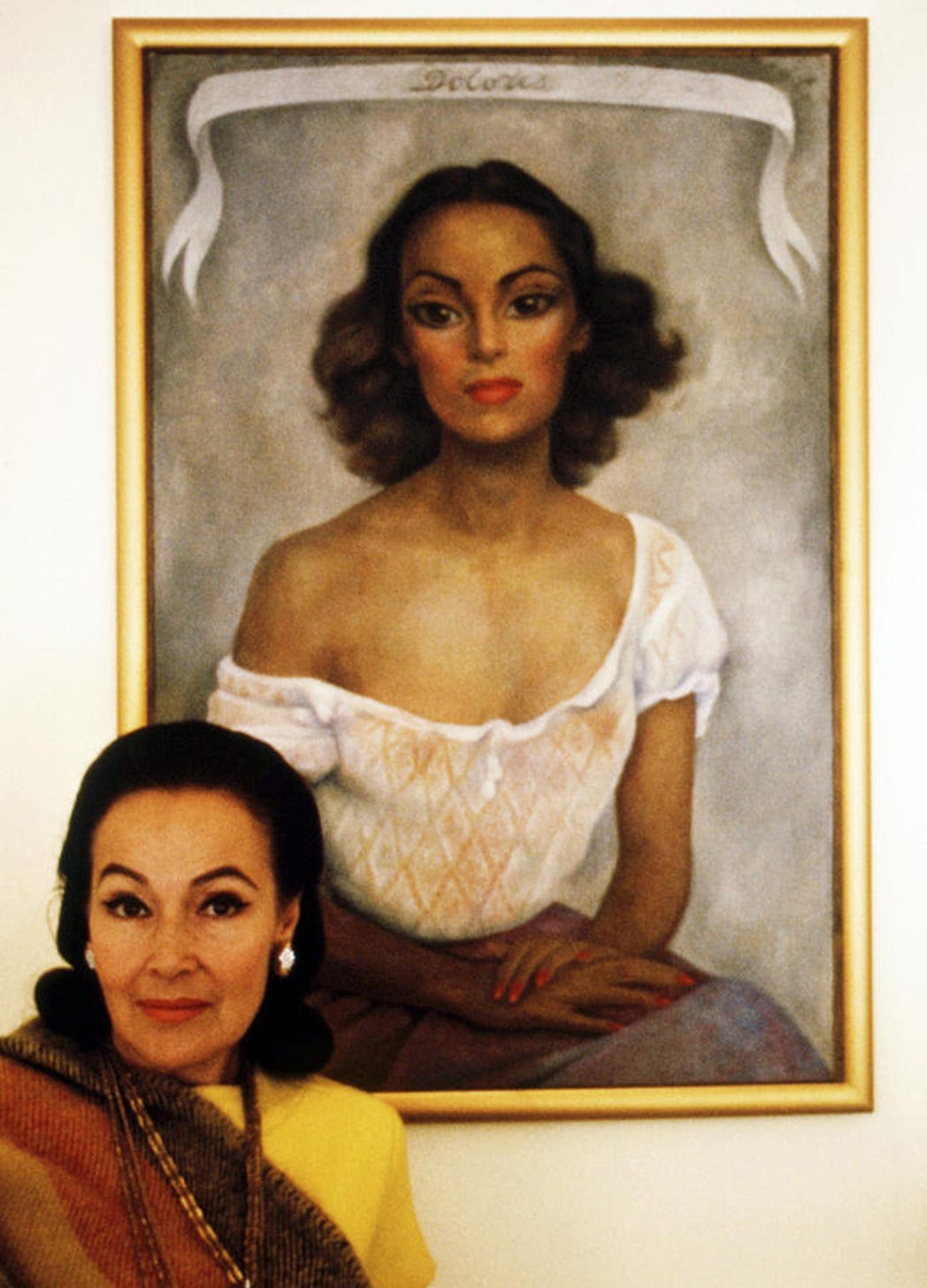
In the 1930s, del Río posed for Hugo Ballin in his studio. She also sat for close friends Rosa Rolanda and Diego Rivera. Rolanda’s depiction is a straightforward head-and-shoulders study, where del Río sits before drapery, wearing a ruffled bodice with two tropical flowers in her hair and a pensive stare. The painting served as a prop in the 1952 film The Right to Be Born (El derecho de nacer). Rivera painted her most famous portrait in New York, which was del Río’s favourite. The work is a luminous depiction of her doe-like beauty. Frida Kahlo lent her the traditional Mexican blouse and skirt. Like Rolanda, Rivera’s work was featured in one of del Río’s films. In a scene from The Love Nest (La casa chica), del Río tours the exhibition National Tribute to Diego Rivera: 50 Years of Artistic Work at the Palace of Fine Arts and stops to contemplate Vendimia de flores (also known as Flower Festival: Feast of the Bells or Vendedora de Flores).
Man Ray photographed del Río during his Hollywood years. Besides del Río and Ava Gardner, he captured few celebrities during this period. Cecil Beaton, Edward Steichen and George Hoyningen-Huene also photographed her. Huene’s classicized Surrealist image shows del Río’s disembodied head resting on a table, crowned with a flowered cap reminiscent of a laurel wreath. In another, del Río is posed next to a familiar horse sculpture seen throughout his work. Huene, who greatly admired del Río, remarked on her features as a model, “The bone structure of her head and body is magnificent. Her skin is like ripe fruit.”
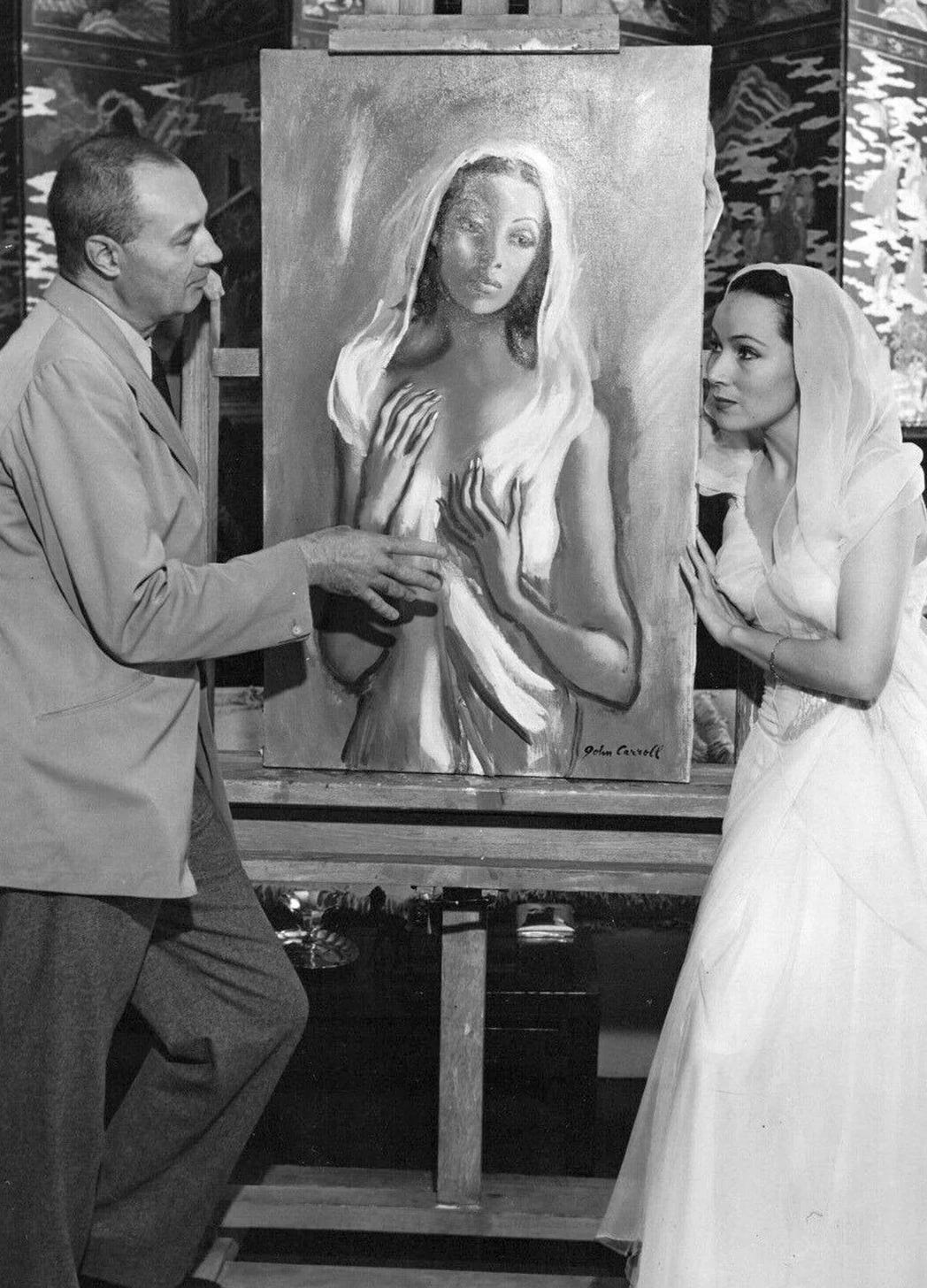
In 1941, muralist José Clemente Orozco painted her portrait, which had been commissioned by Orson Welles. By this time, Orozco was losing his sight. Del Río said, “He painted his tragedy on my face!” though she placed it prominently in her home. In addition to the oil painting, Orozco created charcoal and paper studies of her, some of which have passed through collections like the Museum of Modern Art in New York and auction houses such as Christie’s.
In the 1950s, photographer Slim Aarons captured del Río at her home in Acapulco. The images evoke the mythical Acapulco of this era and exude the glamour and aesthetic of his style. She wears a printed bandeau bikini, high-waisted bottoms, flowers in her hair, and red lipstick. Although no definitive list exists, I found additional works of del Río by Theodore N. Lukits, John Carroll, Charles Gates Sheldon, Frances Cranmer Greenman, Minna Braasch, Frances Gauner Goshman, Adolfo Best Maugard, Antonieta Figueroa, Jean Negulesco, and Carlos Pellicer.
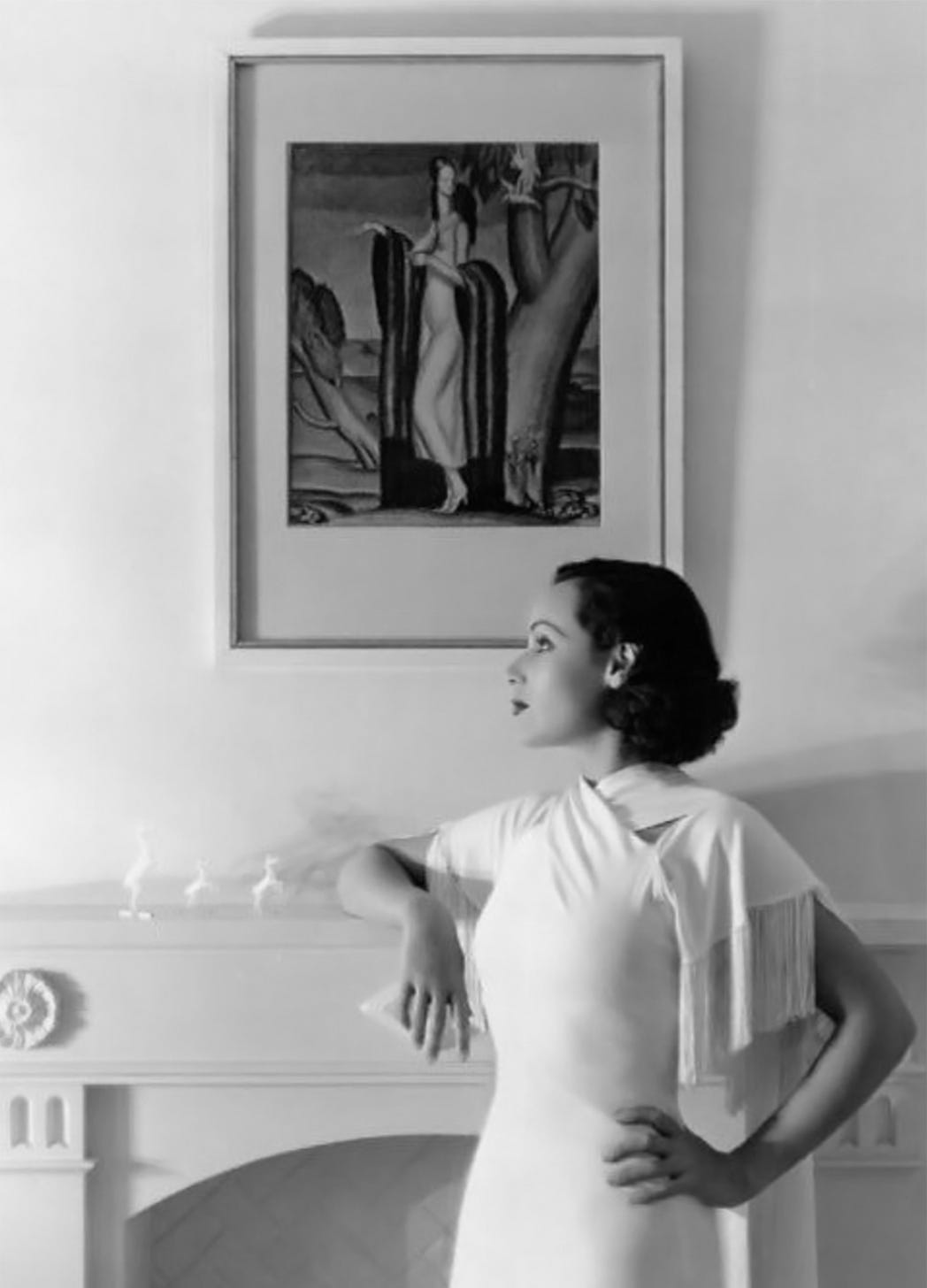
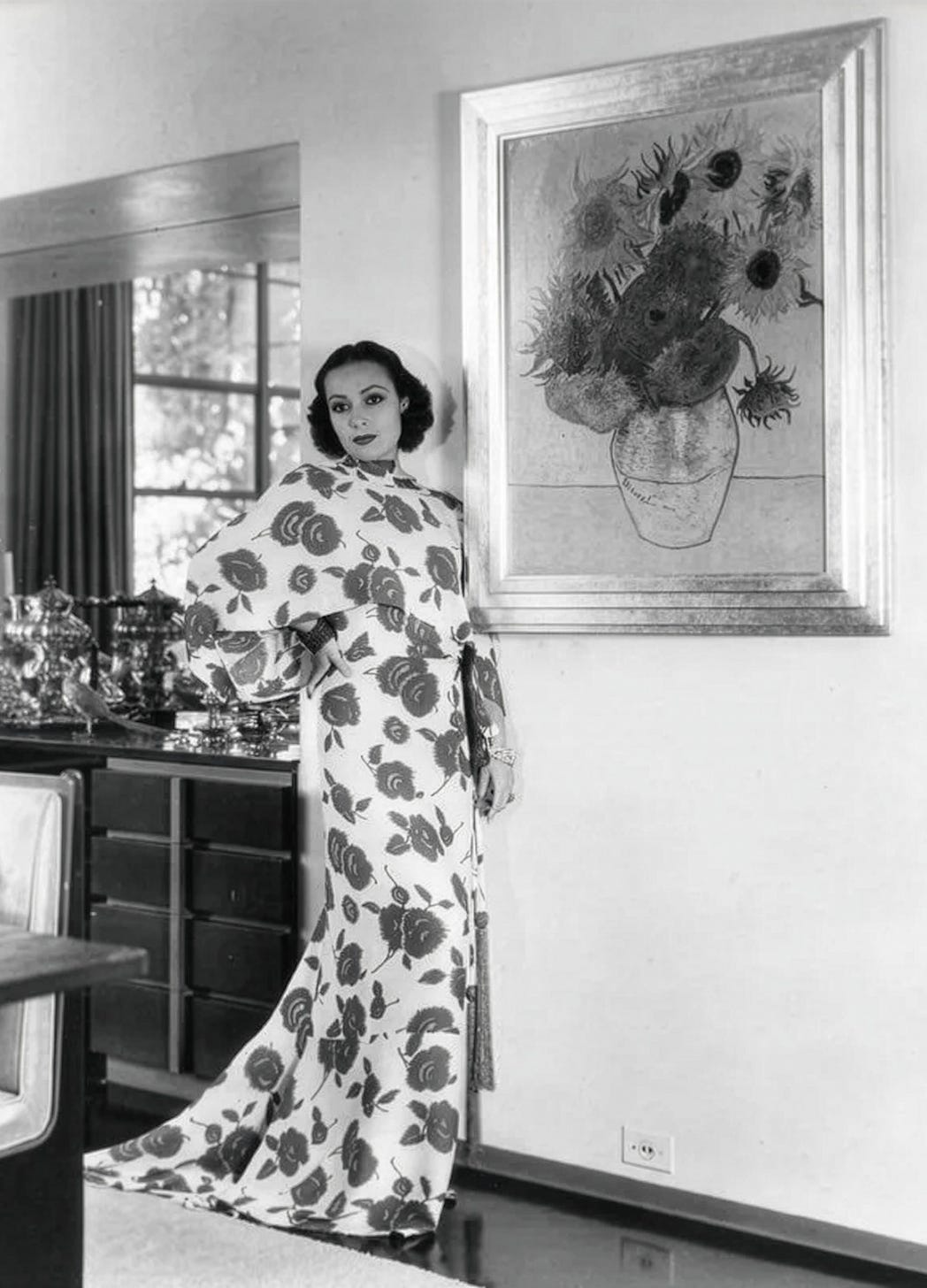
An inspiration for various artists and works, del Río was also a great art lover. Her large collection included pre-Columbian ancestral pieces. She owned two original 1888 paintings by Vincent van Gogh, Sunflowers (Les Tournesols) and Portrait of Armand Roulin. Photographs of her home show Charles Demuth’s After Sir Christopher Wren (1920) and illustrations by Jean Dupas.
Del Río collected work from friends, including a 1929 lithograph titled The Franciscan (El Franciscano) by Orozco, along with paintings by Rivera and Kahlo. She helped Kahlo financially over the years, and Kahlo gifted her paintings. Two Nudes in a Forest (Dos desnudos en un bosque) and Girl with Death Mask (Niña con máscara mortuoria) were among her collection.
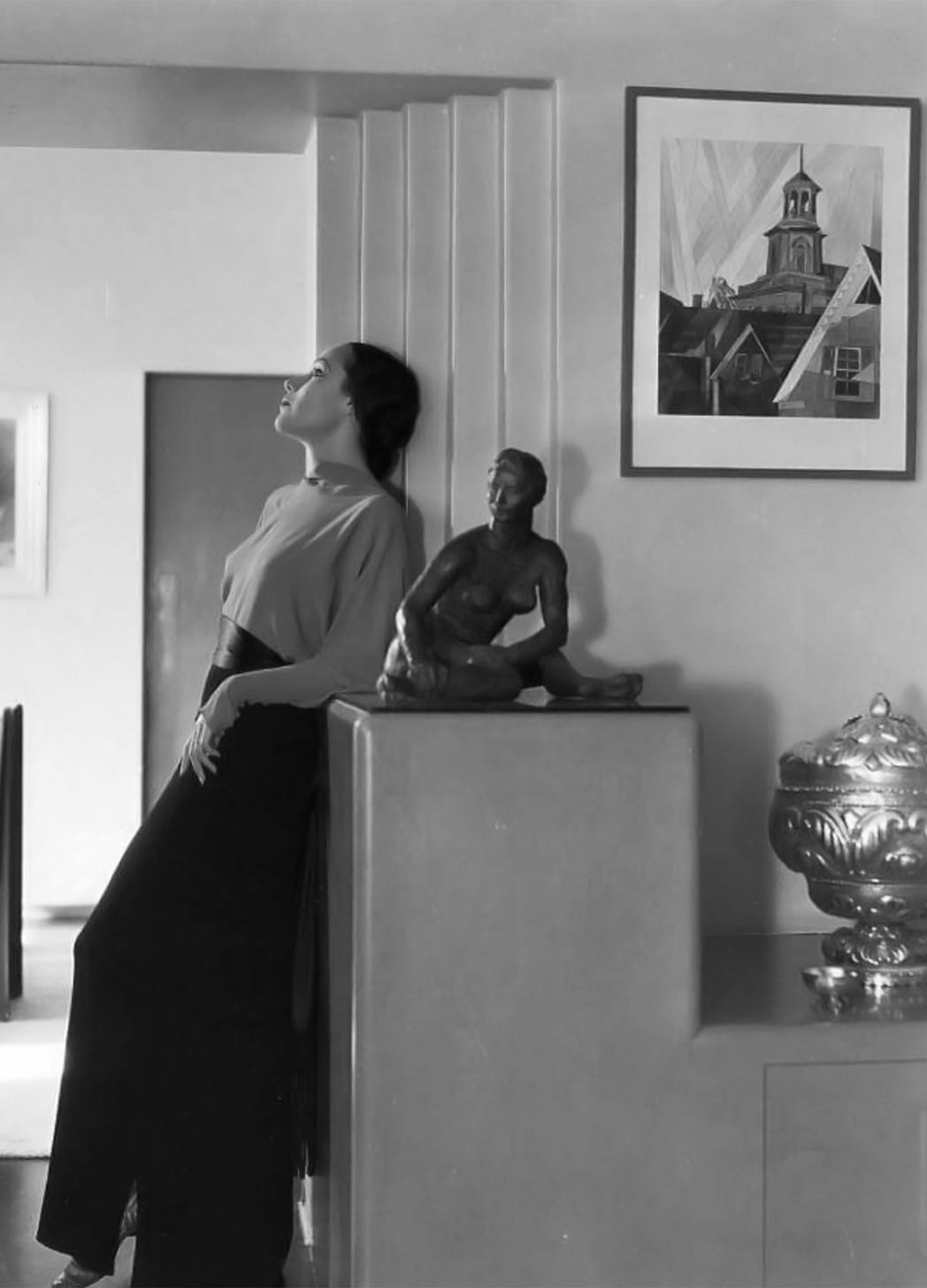
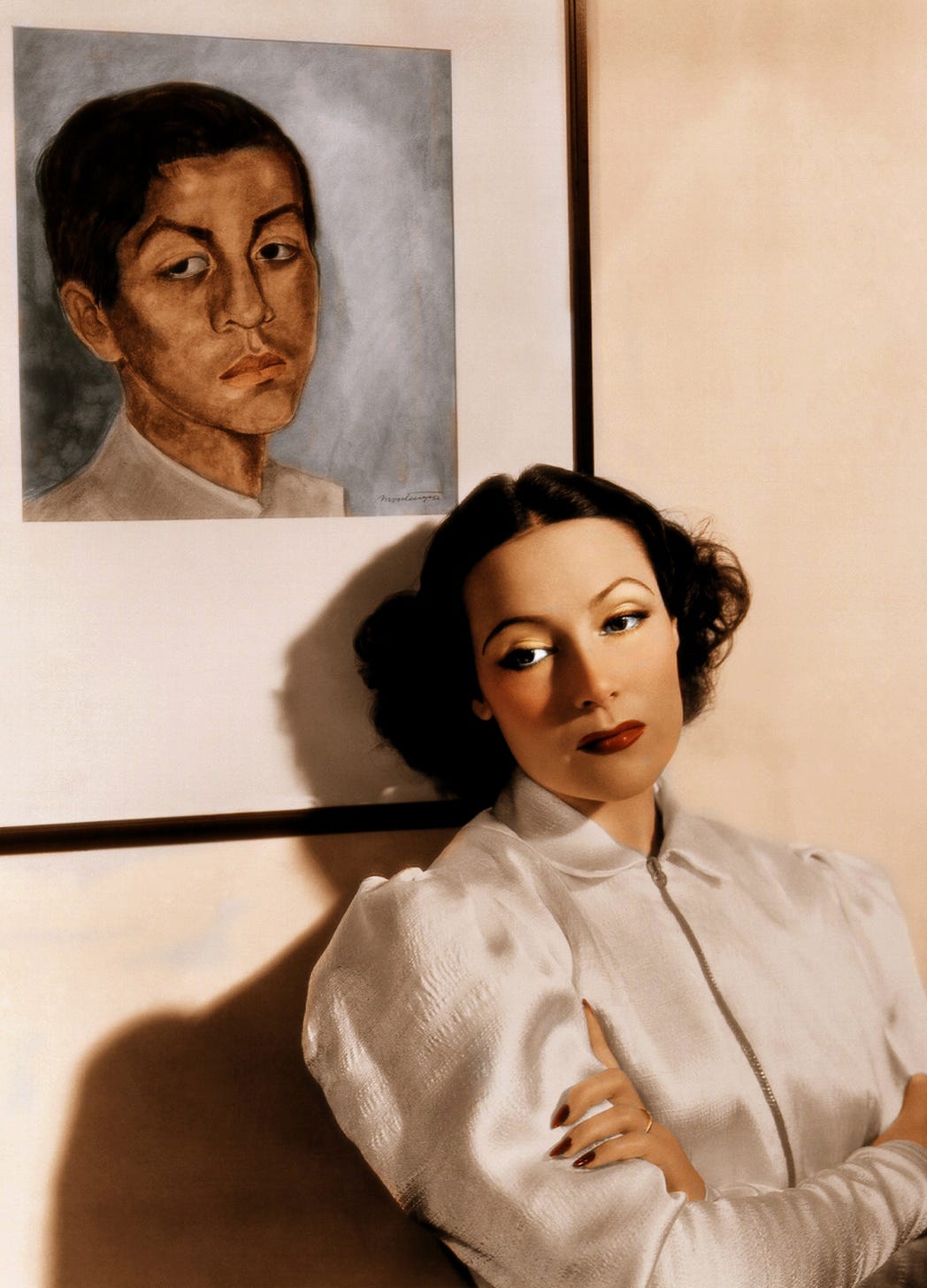
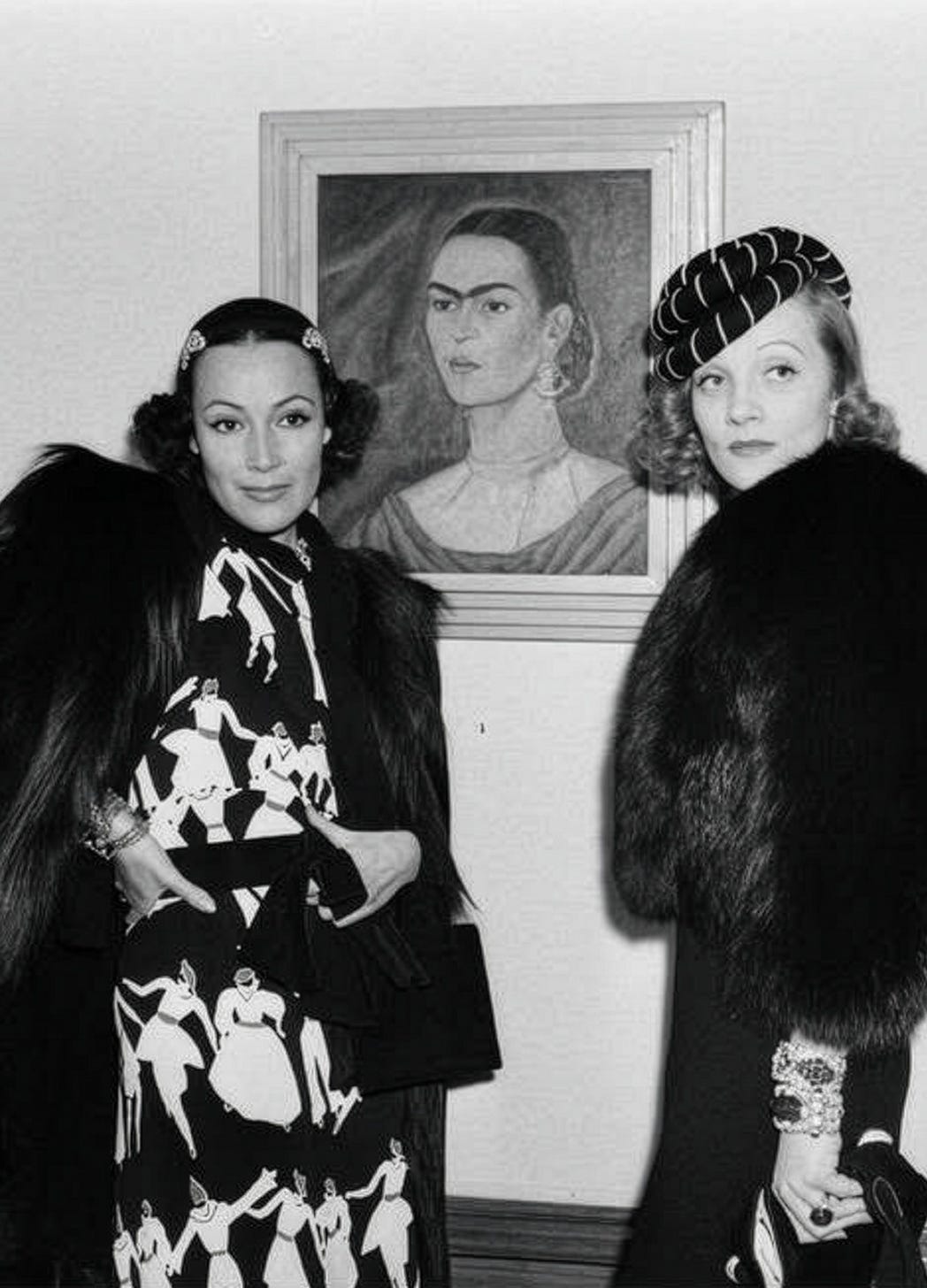
Hollywood friendships included Marlene Dietrich, Greta Garbo, Mary Pickford, Douglas Fairbanks, Charlie Chaplin, Orson Welles and William Randolph Hearst. Dietrich and del Río were famously photographed with a portrait of Kahlo by Roberto Montenegro. Montenegro was friends with both Kahlo and Rivera and hosted the couple’s wedding reception at his home.
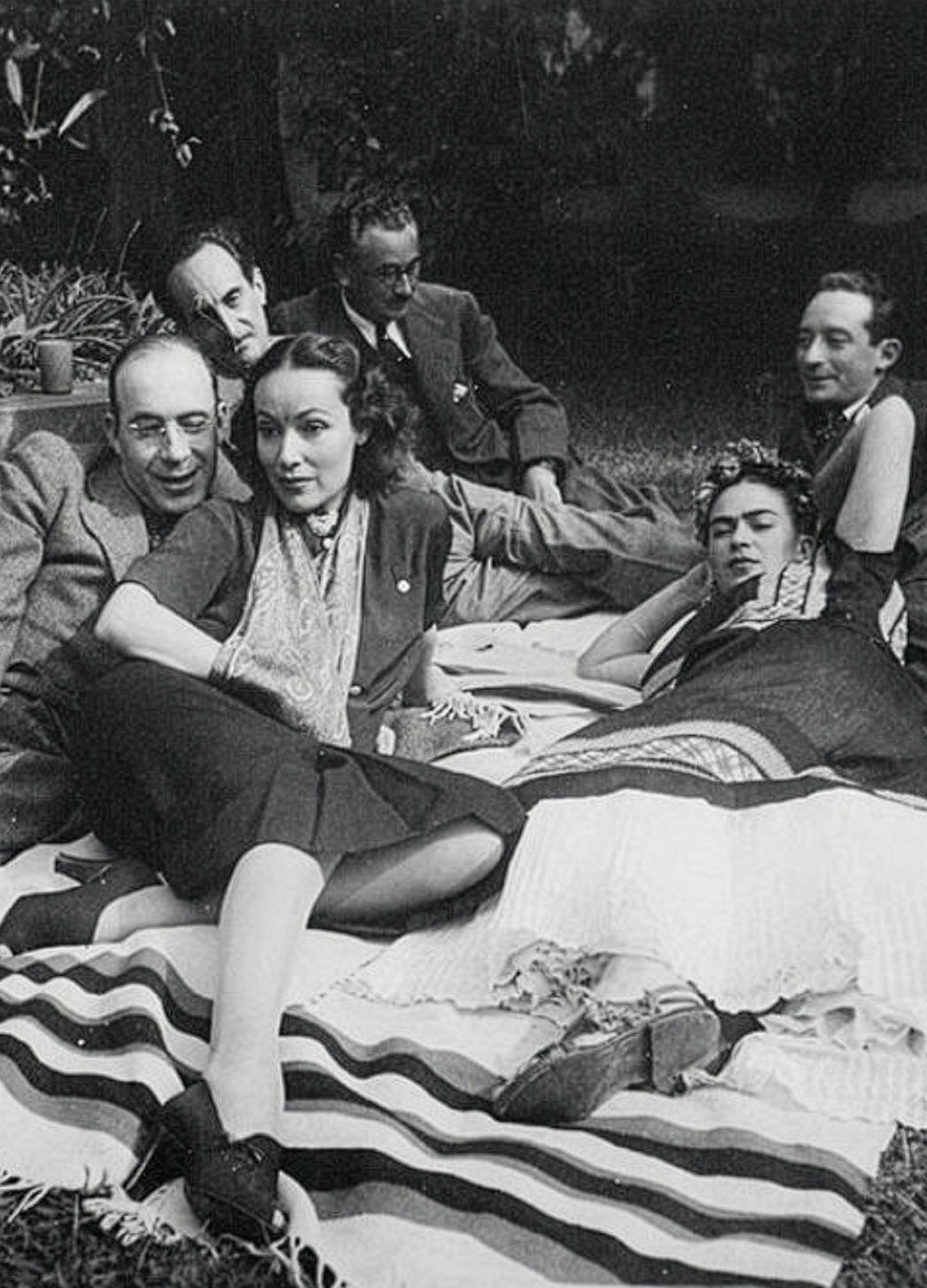
When del Río returned to Mexico City in 1942, she found herself at the center of a flourishing artistic and cultural renaissance. Her close friends included Rosa Rolanda, Miguel Covarrubias, Pablo Neruda, Emilio “El Indio” Fernández, and co-star Pedro Armendáriz. She was perhaps closest with Rolanda and frequented her home in Tizapán alongside María Félix, Luis Barragán, Alfonso Reyes, and her cousin María Asúnsolo. Asúnsolo, an art dealer in Mexico City, also inspired her clients and friends to create portraits of her. Del Río owned several of Covarrubias’ Impossible Interviews illustrated for Vanity Fair, including Clark Gable and Edward, the Prince of Wales and Marie of Romania and Mae West.
In 1957, del Río became the first female jury member at the Cannes Film Festival and was photographed there with friend and fellow juror Jean Cocteau. Months later del Río posed alongside her friend Dalí. As the event’s host, he chose her as a special guest for his exhibition at the MoMA in New York. In his characteristic style, Dalí declared that del Río’s beauty and intelligence made her as bewitching as she was dangerous.
By 1966, del Río co-founded the Society for the Protection of the Artistic Treasures of Mexico with philanthropist Felipe García Beraza. The society protected buildings, paintings, and other cultural works in México. In her will, del Río stipulated that her art collection be donated to Mexico's Instituto Nacional de Bellas Artes y Literatura for display in various museums in Mexico City, including the National Museum of Art, the Museum of Art Carillo Gil, and the Diego Rivera & Frida Kahlo House-Studio. She donated her photo archive to the Carso Center for the Study of Mexican History.
Diego Rivera, Vogue, April 1939
